
Video Surveillance Systems for Your Business
Video Surveillance System for Your Business: Here’s What You Need to Know
Protect your employees and business from injury liability, vandalism, theft, intruders, and many other threats that could affect your business’ success. All it takes is a little proactive action and you can rest easy at night knowing your business and employees are protected 24/7.
Whether you need indoor or outdoor surveillance, a video surveillance system can help you prevent crime and keep the premises safe, all with the latest technology and convenience to make monitoring easy.
Ready to learn more? Get in touch with an SSG Tech specialist and we’ll help you determine the right video surveillance system for your needs today.
What Is a Video Surveillance System?
A video surveillance system uses cameras, recording equipment and software to monitor and record activity in and around a business property. Depending on the system, authorized users may be able to view live video, review recorded footage and receive alerts when specific types of activity are detected.
Commercial video surveillance systems can be designed to monitor entrances, parking areas, offices, warehouses, loading areas and other locations where additional visibility is important. Cameras can be selected for indoor or outdoor use based on factors such as lighting, weather exposure, viewing distance and the level of image detail required.
Recorded video can also provide useful information when investigating incidents, reviewing activity or verifying events that occurred on the property. The appropriate cameras, recording equipment, storage capacity and retention period will depend on the requirements of the business.
Indoor vs. Outdoor Video Surveillance Cameras
Indoor and outdoor surveillance cameras serve the same basic purpose, but the environment in which a camera will operate plays an important role in selecting the right equipment.
Outdoor cameras are designed to operate in environments where they may be exposed to rain, moisture, temperature changes, dust and other conditions. Camera housings and environmental ratings should be selected based on the location where the equipment will be installed.
Indoor cameras generally do not require the same level of environmental protection, allowing the camera selection to focus more heavily on factors such as viewing angle, image detail, lighting conditions and the area that needs to be monitored.
Other considerations can include resolution, low-light performance, field of view, mounting location and whether specialized capabilities are required for a particular area. The best camera for an entrance, for example, may be different from the equipment needed to monitor a parking lot, warehouse or interior hallway.
A commercial video surveillance system may use several types of cameras throughout the same property. Proper camera selection and placement can help provide useful coverage while avoiding unnecessary equipment or gaps in visibility.
The technological world moves quickly. What used to be high state-of-the-art technology a decade ago is now commonplace, available to even homeowners and renters. Today, both types of cameras can connect over WiFi and send live data to your tablet or phone, allowing you to manage alerts in real-time, and automatically record events.
Learn more about the differences between security cameras and surveillance cameras.
Features to Look for in a New System
The right video surveillance features depend on the areas you need to monitor, how the footage will be used and how your business wants to manage alerts and recordings. More features are not always better if they do not support a real operational or security requirement.
When evaluating a commercial video surveillance system, consider features such as:
High-resolution video appropriate for the area being monitored
Low-light or night-vision capabilities
Wide-angle or varifocal lenses for different viewing distances
Motion-based recording and event alerts
Remote viewing from authorized computers or mobile devices
Adequate video storage and retention capacity
Search and playback tools for reviewing recorded events
User permissions and secure access controls
Integration with compatible access-control or security systems
Scalability for additional cameras or locations
The best system is one that provides useful coverage without adding unnecessary complexity. SSG Technologies can help determine which features are appropriate based on your property, security requirements and existing infrastructure.
Copyright Andrey Popov | Dreamstime.com
What Types of Cameras Are Used in Video Surveillance Systems?
Commercial video surveillance systems can use different types of cameras depending on the property, existing infrastructure and areas that need to be monitored. Camera selection should be based on the requirements of each location rather than using the same type of camera throughout the entire facility.
IP cameras: These cameras transmit video over an IP network and are commonly used in modern commercial surveillance systems. Depending on the model, they may support features such as high-resolution video, remote management, motion detection and video analytics.
Analog cameras: Analog cameras transmit video to compatible recording equipment such as a DVR. They may still be appropriate for businesses with existing analog infrastructure or situations where replacing an entire system is unnecessary.
Dome cameras: Their compact housing makes them useful for many indoor and outdoor locations, including offices, retail spaces, hallways and building entrances.
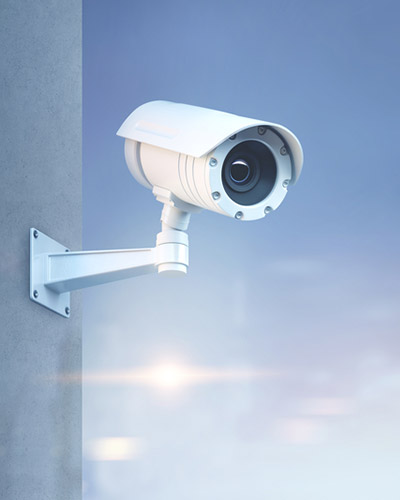
Bullet cameras: These cameras have a more directional design and are commonly used when a specific area, entrance, perimeter or longer viewing distance needs to be monitored.
PTZ cameras: Pan-tilt-zoom cameras can change their viewing direction and zoom level. They can be useful in locations where operators need greater control over the area being observed.
Specialized cameras: Depending on the environment, a business may also require cameras designed for low-light conditions, wide-area coverage, license-plate capture or other specialized applications.
A properly designed surveillance system may combine several camera types to provide appropriate coverage throughout the property. Camera placement, lighting, viewing distance and the level of detail required should all be considered before equipment is selected.
What to Look for When Choosing a Camera for Your System
Choosing the right surveillance camera involves more than comparing resolution or selecting the newest model. The camera should be appropriate for the location, lighting conditions, viewing distance and type of activity you need to monitor.
Image quality and resolution: Higher resolution can provide greater image detail, but the appropriate resolution depends on what you need to see and the size of the area being monitored.
Field of view: The camera and lens should provide adequate coverage of the intended area. Some locations require a wide field of view, while others require a narrower view with greater detail at a distance.
Low-light performance: Entrances, parking lots, warehouses and other areas may experience significant changes in lighting. Cameras designed for low-light conditions can provide more useful video when available light is limited.
Indoor or outdoor environment: Outdoor cameras should have appropriate environmental protection for the conditions in which they will operate. Indoor cameras can be selected primarily around coverage, image quality and mounting requirements.
Recording and storage requirements: Camera resolution, frame rate and recording schedule can affect the amount of storage required. These factors should be considered when designing the overall surveillance system.
Remote access and alerts: Depending on the equipment and system configuration, authorized users may be able to view cameras remotely or receive notifications when certain events are detected.
A successful video surveillance system starts with selecting cameras for the specific areas they need to monitor. SSG Technologies can help evaluate camera locations, coverage requirements and system design so the equipment works together as a complete solution.
Copyright Dm Stock Production | Dreamstime.com
Video Surveillance Recording Systems: NVR vs. DVR
The recording system is an important part of a video surveillance system because it determines how camera footage is received, recorded, stored and accessed. Two common recording technologies are Network Video Recorders (NVRs) and Digital Video Recorders (DVRs).
NVR (Network Video Recorder): An NVR is typically used with IP cameras that transmit video over a network. The NVR records and manages video from connected cameras and stores the footage on internal storage drives or other configured storage systems. NVR-based systems are commonly used for modern commercial video surveillance installations.
DVR (Digital Video Recorder): A DVR is generally used with analog surveillance cameras. Video signals are transmitted from the cameras to the DVR, where the footage is processed, recorded and stored. DVR systems may be a practical option for businesses that already have compatible analog cameras and cabling in place.
Hybrid systems: Some recording systems can support both IP and analog cameras. This can be useful when a business wants to retain portions of an existing surveillance system while gradually adding newer camera technology.
The appropriate recording system depends on the cameras being used, existing infrastructure, storage requirements, number of cameras and how the business needs to access recorded video. A properly designed system should also provide enough capacity for future expansion when additional cameras may be needed.
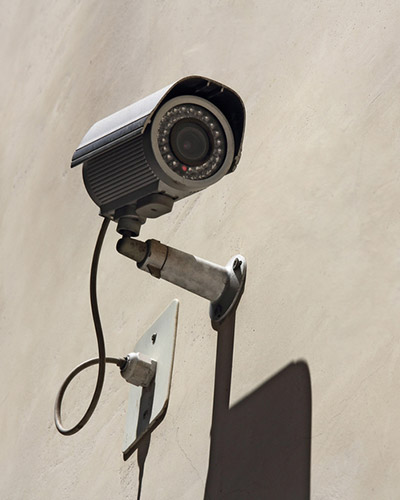
Copyright Ivansmuk | Dreamstime.com
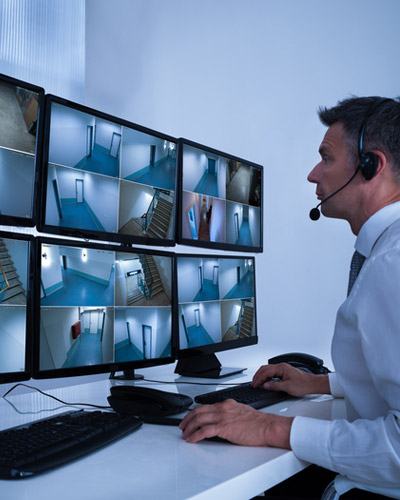
How Are Business Security Cameras Monitored?
How a business monitors its security cameras depends on the purpose of the system and the level of oversight required. Some businesses primarily record video so footage can be reviewed after an incident, while others may use live viewing or event-based alerts to monitor activity as it occurs.
Recorded video: Many businesses use surveillance cameras to continuously or selectively record activity. When an incident occurs, authorized personnel can review the recorded footage to better understand what happened.
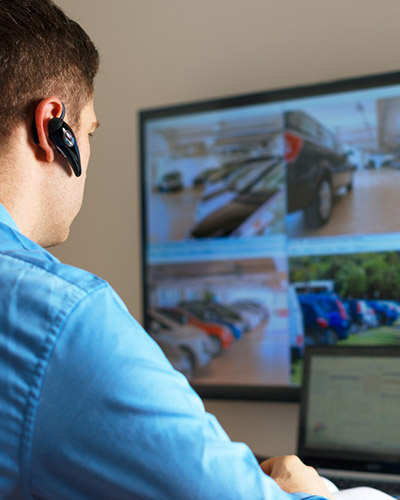
Live monitoring: Cameras can also be viewed in real time when active monitoring is needed. Depending on the system, authorized users may be able to view live video from a workstation, smartphone or other supported device.
Event-based monitoring: Some surveillance systems can generate alerts based on motion or other configured events. This can help draw attention to activity without requiring someone to continuously watch every camera.
The appropriate monitoring approach depends on the business, the areas being protected and the purpose of the surveillance system. A company may use a combination of recorded video, live viewing and event notifications to meet different security requirements throughout its property.
How Long Does Footage Stay on Security Cameras?
How long security camera footage is retained depends on the needs of the business and the design of the video surveillance system. There is no single retention period that is appropriate for every organization.
Storage capacity: Higher-resolution cameras, higher frame rates and a larger number of cameras can increase the amount of storage required. The available storage capacity directly affects how much recorded video can be retained.
Recording method: Systems that record continuously generally require more storage than systems configured to record based on schedules, motion or other events.
Business requirements: A company may need to retain footage long enough to investigate incidents that are not discovered immediately. Retention policies may also be influenced by company procedures, insurance considerations or requirements that apply to a particular industry.
System design: Storage should be planned when the surveillance system is designed rather than treated as an afterthought. The number of cameras, recording quality and desired retention period can all be used to determine the appropriate storage capacity.
SSG Technologies can help businesses determine their video storage requirements and design a surveillance system with appropriate recording and retention capacity.
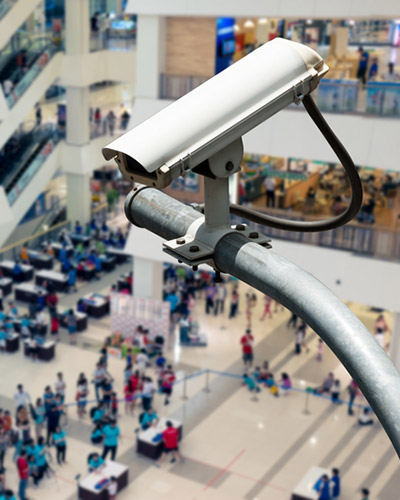
Copyright Stnazkul | Dreamstime.com
Why Does Your Business Need Video Surveillance?
Video surveillance can provide businesses with greater visibility into what is happening throughout their property. A properly designed system can help support security, incident investigation and day-to-day operations while providing recorded video when questions arise about an event.
Deter unwanted activity: Visible surveillance cameras may discourage theft, vandalism, trespassing and other unwanted activity by making it clear that areas are being monitored.
Investigate incidents: Recorded video can help businesses review what occurred before, during and after an incident. This can provide useful information when investigating theft, property damage, workplace incidents or other events.
Monitor important areas: Cameras can provide additional visibility around entrances, exits, parking areas, loading docks, warehouses and other locations that may be difficult to monitor continuously.
Protect employees, customers and property: Video surveillance can help businesses maintain awareness of activity throughout their facilities and provide recorded information when a safety or security concern occurs.
Support business operations: Surveillance footage can sometimes provide useful insight beyond security, such as reviewing deliveries, verifying access to certain areas or understanding activity around a facility.
Provide remote visibility: Depending on the system, authorized users may be able to securely view live or recorded video when they are away from the property.
Video surveillance is most effective when the cameras, recording equipment and storage are designed around the specific needs of the property. SSG Technologies can help businesses identify important areas to monitor and develop a system that provides practical, reliable coverage.
How Are Commercial Security Cameras Installed?
A successful video surveillance installation begins with planning. Before cameras are installed, the property should be evaluated to determine which areas need coverage, where cameras should be positioned and what equipment is appropriate for each location.
Site evaluation: Important areas such as entrances, exits, parking areas, hallways, warehouses and other locations are evaluated to determine appropriate camera placement and coverage.
Camera selection and placement: Cameras are selected based on factors such as indoor or outdoor use, lighting conditions, viewing distance and the level of image detail required. Placement is planned to provide useful coverage while minimizing unnecessary blind spots.
Network and recording setup: Cameras are connected to the appropriate network and recording equipment. Storage capacity, recording settings and authorized access are configured based on the requirements of the system.
Installation and testing: After the equipment is installed, cameras and recording components should be tested to verify image quality, viewing angles, recording and system operation. Camera positions can then be adjusted where necessary.
System setup and support: Once installation is complete, users should understand how to access live video, review recordings and operate the features available with their system. Ongoing support can also help address questions or changes that arise after installation.
SSG Technologies can plan, install and configure commercial video surveillance systems for businesses throughout the Baltimore and Washington metropolitan area, with continued support after installation.
Copyright Stnazkul | Dreamstime.com
DIY vs. Professional Video Surveillance Installation
Businesses have many video surveillance products available to purchase and install themselves, but a commercial surveillance system involves more than simply mounting cameras and connecting a recorder. Camera placement, network infrastructure, storage, lighting and system configuration can all affect how useful the system will be when video is actually needed.
DIY installation: A self-installed system may be suitable for a small or relatively simple location with only a few cameras. However, the business is responsible for selecting compatible equipment, determining camera locations, installing the necessary cabling or network connections and configuring the recording system.
Professional installation: A professionally designed system begins by evaluating the property and identifying the areas that need coverage. Cameras, recording equipment and storage can then be selected and configured as parts of a complete system rather than as individual components.
Proper camera placement: Even high-quality cameras can provide poor results when they are installed in the wrong location. Viewing angles, lighting, mounting height, obstructions and the amount of detail required should all be considered before cameras are installed.
Long-term support: A professionally installed system also gives a business a resource for future service, troubleshooting, system changes and expansion as its surveillance requirements evolve.
For businesses that depend on video surveillance as part of their security strategy, professional system design and installation can help ensure the equipment is properly selected, configured and positioned for the property it needs to monitor.
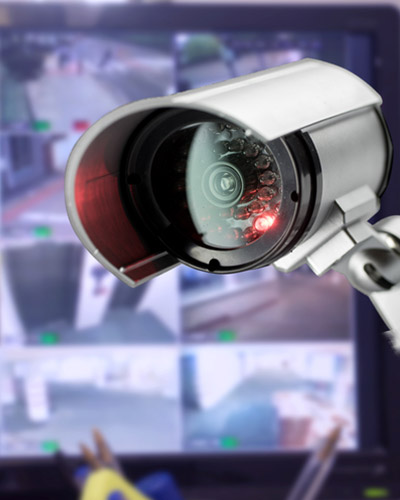
Copyright Alicephotography | Dreamstime.com
Secure Your Business Today
A professionally designed video surveillance system can provide greater visibility into your property and give your business valuable recorded information when an incident occurs. The right solution starts with understanding what you need to monitor and selecting cameras, recording equipment and storage that fit those requirements.
SSG Technologies can help evaluate your property, identify important areas for camera coverage and design a video surveillance system around the needs of your business. From system planning and installation to configuration and ongoing support, our goal is to provide a surveillance solution that is practical, reliable and easy to manage.
SSG Technologies serves businesses throughout the Baltimore and Washington metropolitan area. Contact our team to discuss your video surveillance requirements and learn how we can help design the right system for your facility.
Request a Video Surveillance Consultation
Copyright Denisismagilov | Dreamstime.com